
CHECH ANNUAL THEME · 2026–2027
The Formative Home
a school of deeper humanity
The home is not the backdrop to the homeschooling mission. It is the mission.
The Formative Home invites CHECH families to look at their homes with fresh eyes: to see the ordered kitchen, the made bed, and the family dinner table not as domestic maintenance but as acts of formation. The parent who tends the home in a spirit of love and service is already educating. The atmosphere of the home presses in on children constantly, shaping their habits of mind and heart long before a single lesson is opened.
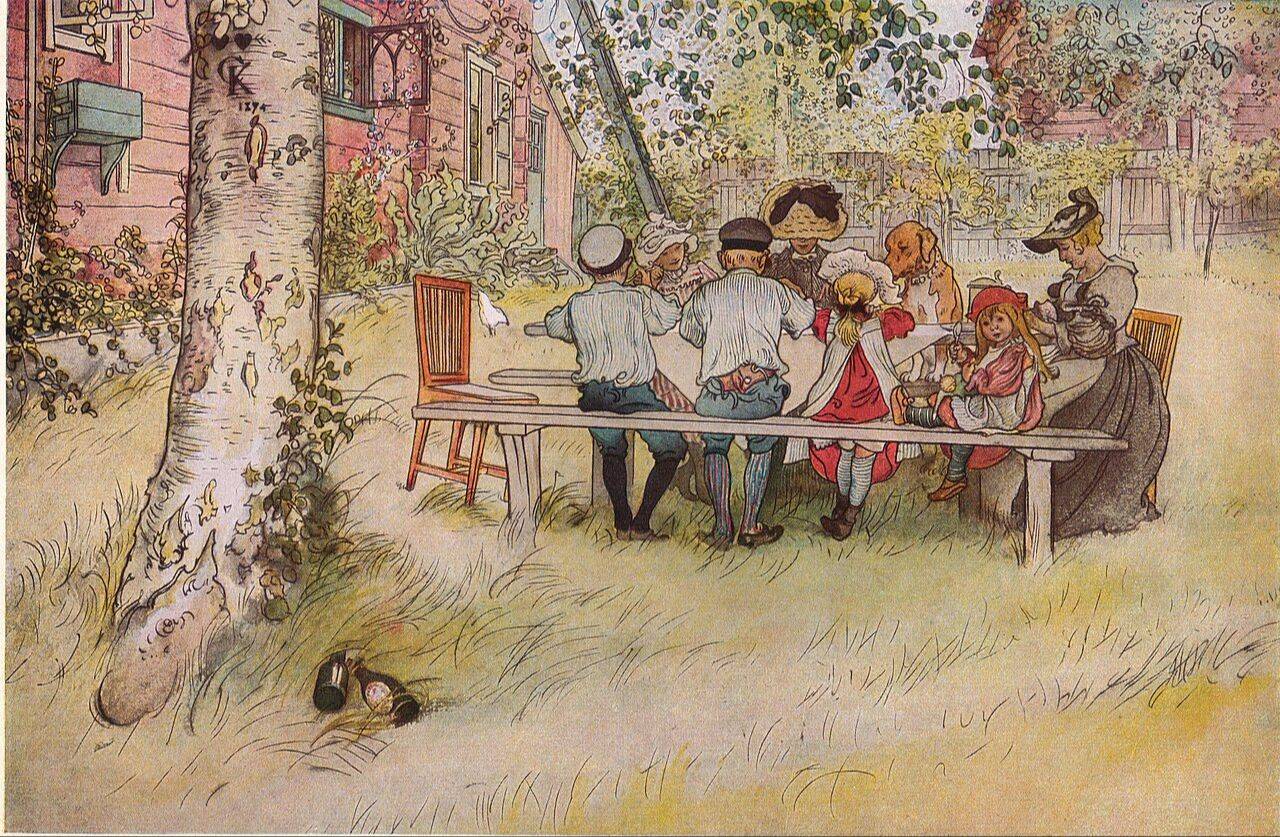
Where education begins
Every home is forming its children, whether or not anyone intends it. This is the integrated life of the home, the intellectual and the domestic held together: the great books and the clean kitchen, the lesson plan and the laundry line. The ordered house is not a distraction from the education. It is where the education begins.
None of this requires a new curriculum or a renovated kitchen. It requires deciding that the ordinary work of the house is the education, and then doing it where the children can see.
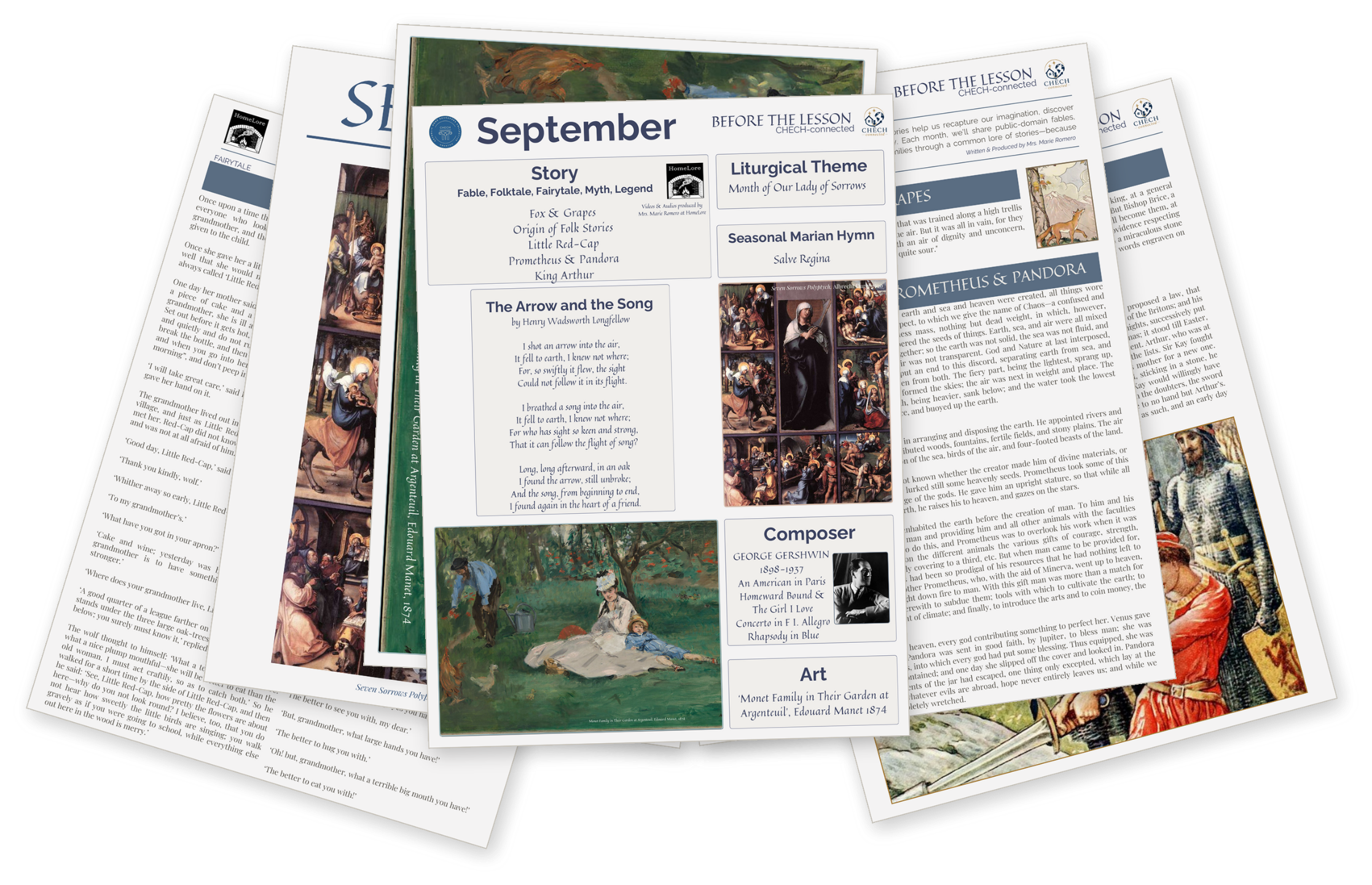
The theme at the table
Before the Lesson
If the home is the first classroom, morning time is its first bell. Before the Lesson turns this year's theme into a daily practice: one guide a month and one story a week for your family's gathering time, with a poem, a hymn, sacred art, and the old stories told aloud by Mrs. Marie Romero of HomeLore. Ten minutes at the table, and the formative home is no longer an idea. It is the hour your family just spent together.
Explore Before the LessonThe Year at Home
Each month's newsletter connects the liturgical season to a dimension of the home.
What it asks of your household
THE SOURCE
A school of deeper humanity
This year's theme takes its name from Familiaris Consortio, St. John Paul II's apostolic exhortation on the Christian family. In it, the Church calls the family a community of persons, a school of deeper humanity where love is first learned. It names parents the first and foremost educators of their children, a right and duty that is original, primary, and irreplaceable. And it describes the home as a domestic church: a church in miniature that believes, prays, and loves together.
“Family, become what you are.”
ST. JOHN PAUL II, FAMILIARIS CONSORTIO
THE COVER ART
Why this painting
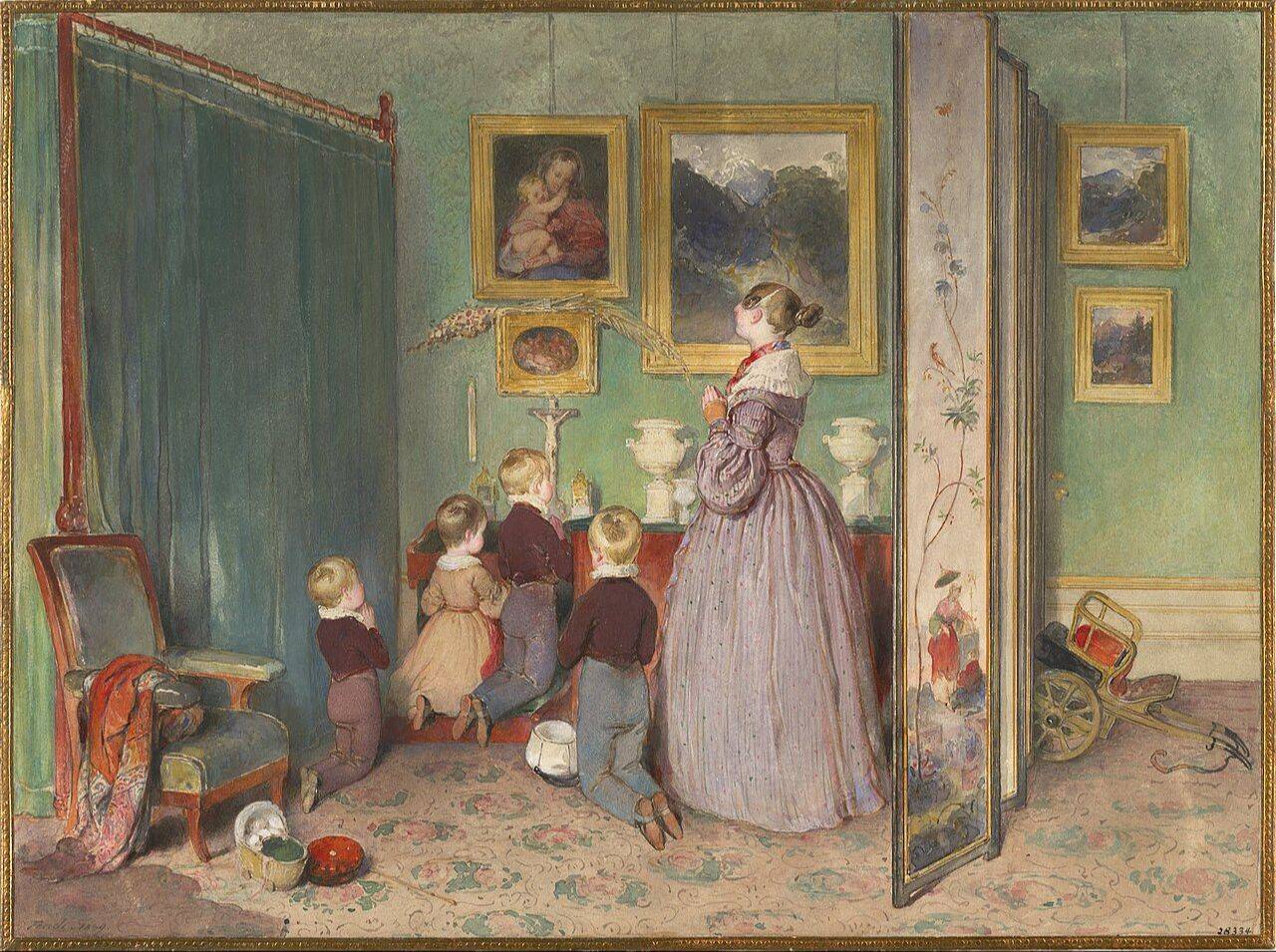
Peter Fendi painted The Evening Prayer in 1839; it hangs today in the Albertina in Vienna. A mother stands at the family altar while her children kneel at the bench beside her. Look at the floor: toys abandoned mid-play, a doll's cradle, a little wagon on its side. Prayer has not been staged for the painter. It simply belongs to the evening, part of the ordinary rhythm of the house. The room holds the whole theme in one frame: art on the walls, a crucifix among the pictures, children learning to pray because the household prays. Formation here is not a lesson. It is the atmosphere.
FOR GRADUATING SENIORS
This year's scholarship essay
The home is the first place of formation. Reflect on how your home has formed you, intellectually, morally, and spiritually. Cite specific moments that taught you what no classroom could, and describe how that formation has prepared you for the next chapter of your life.
Applications and essays are due March 1, 2027.
Scholarship DetailsThe formative home, out in the world
If the home is the first place of formation, the enrichments are where that formation stretches its legs. The habits built at the kitchen table are the very habits that make a museum gallery or a university lecture hall come alive: attention, wonder, reverence for what is true and beautiful. The enrichments do not replace that formation. They reward it.
Explore this year's enrichments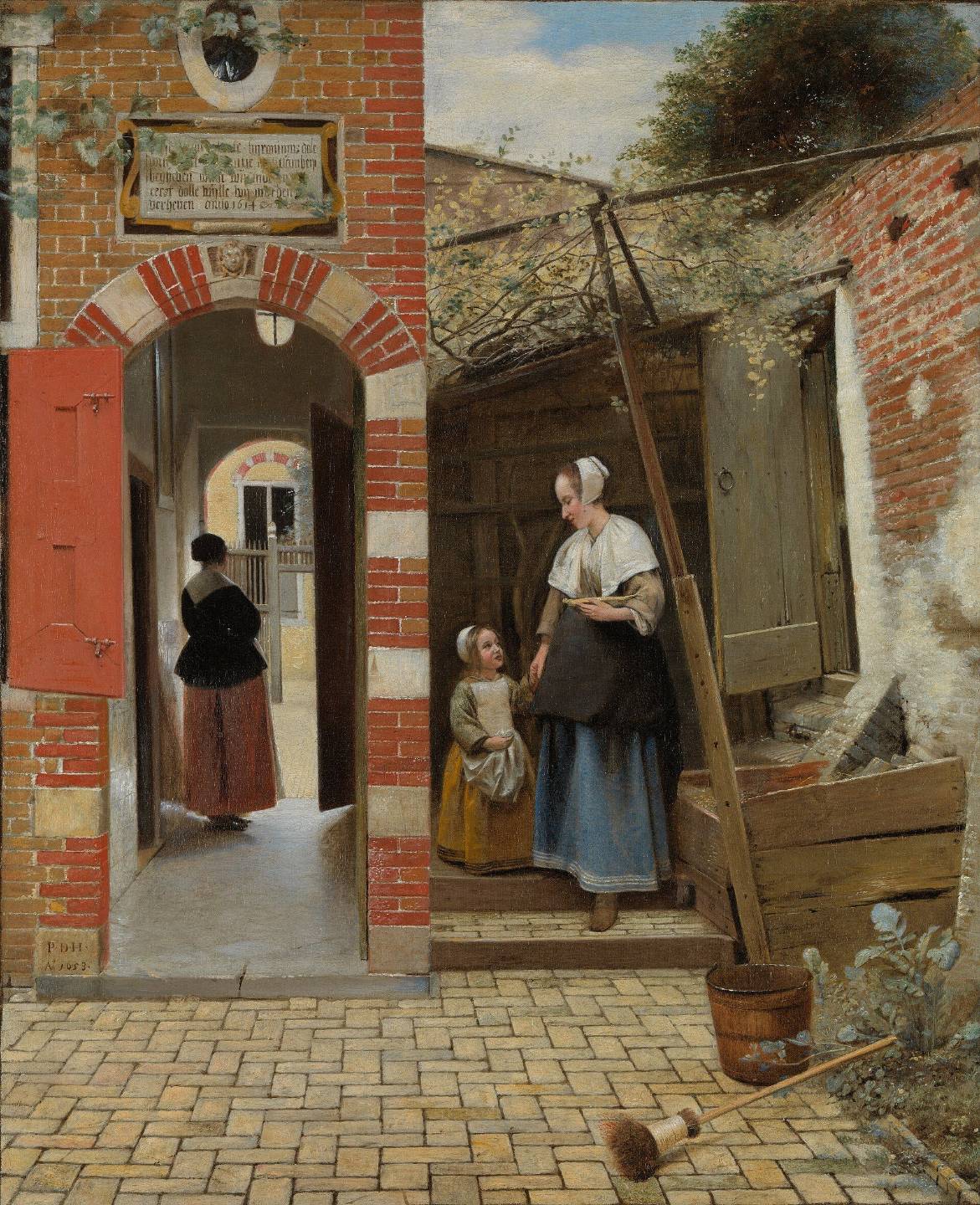
Keep the theme at hand
Download the full annual theme booklet, artwork included, and find the year's programs on the Houston Catholic Family Calendar.
Download the theme bookletVol. 3 will carry The Formative Home: student artwork, creative writing, awards and achievements, and the Class of 2027. Submissions are open to every Catholic homeschooling family in the Houston area, member or not.
Seniors, the magazine wants your writing whether or not you are competing. Send a personal essay, answer this year's prompt, or take up the question from an earlier theme; all of it is welcome in Vol. 3. For the scholarship itself, the essay has to answer this year's prompt.
Submit to the magazine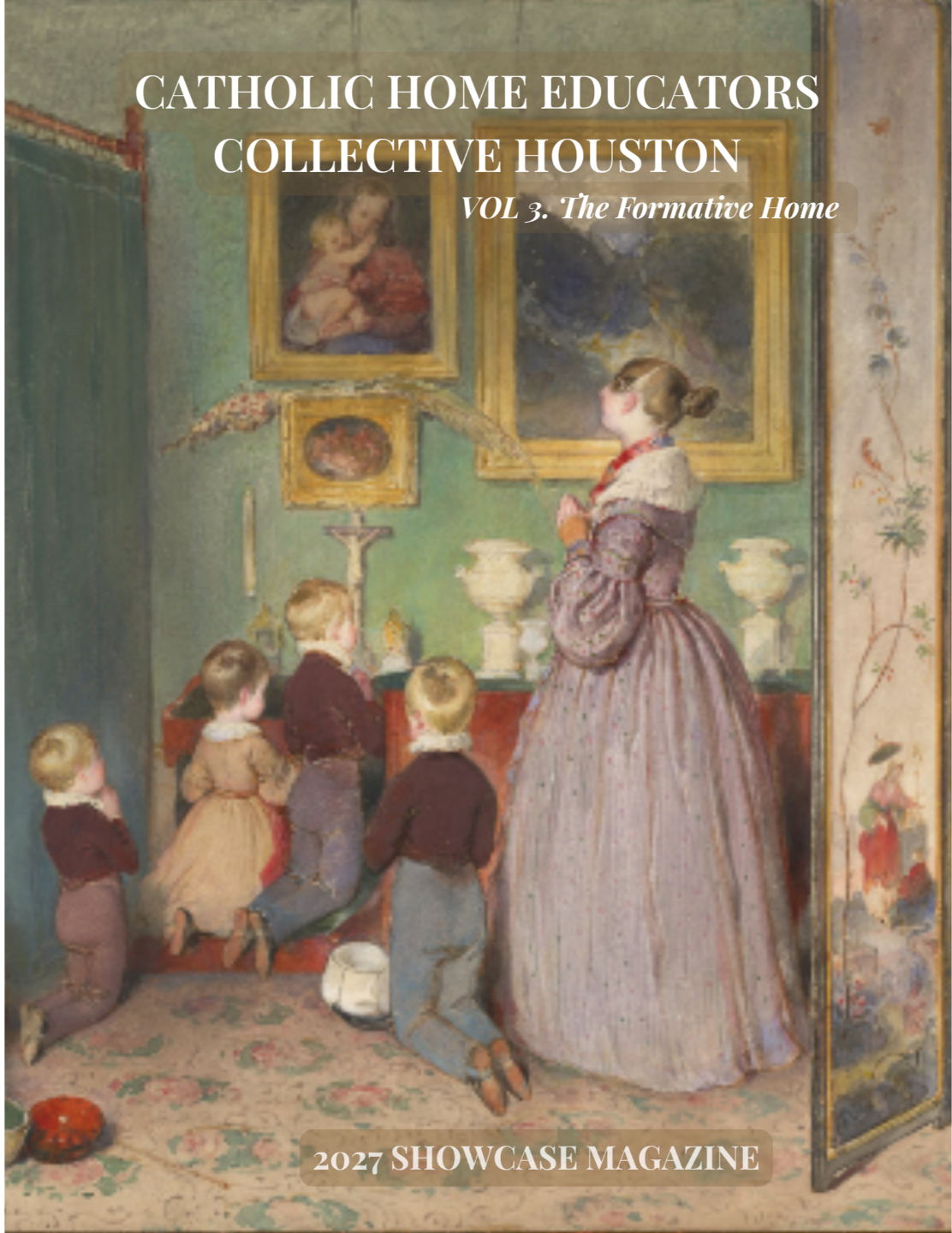
The annual themes
One question runs through all of them: why do you home educate, and how does CHECH help you keep at it? Each year answers it from a different side.
