
2025: The Joy of Homeschooling
Jun 01, 2025
When Diane and I began homeschooling our eleven children in the 1980s we were not fleeing from something but reaching toward something. Our choice was aspirational, not reactionary. We did not reject the school system out of bitterness or fear, but because we held to a higher vision of education—one rooted not in institutions but in the family. This vision had deep roots, drawing nourishment from centuries of tradition that long preceded the rise of compulsory regime schooling. For us, education was not primarily about conformity, socialization, or credentialing, but about cultivating wisdom, virtue, and joy in the heart of the home.
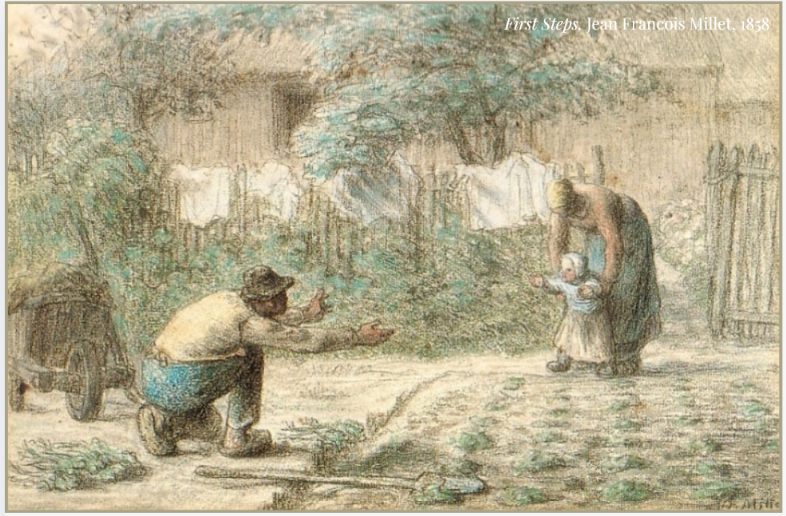
MUSEUM, CITY. Public domain.
The modern state’s assumption that formal education begins at five years old struck us, and still strikes us, as an arbitrary imposition. We knew by experience—confirmed by the wisdom of the ages, experience, and common sense—that education and formation begin at birth, if not earlier. Every song sung, every story read, every poem memorized, every glance, every act of affection is formative. A mother’s smile is pedagogical. A father’s protection is instructive. The family is not merely the first school; it is the most enduring and most human.
We approached homeschooling not as an experiment but as a recovery—an attempt to renew the harmony between love and knowledge that lies at the heart of true education. That harmony, in our experience, could not be mass-produced. It had to be lived out, day by day, in the warp and weft of family life: at the breakfast table, in the garden, on long walks, at bedtime prayers. We were not interested in sheltering our children from reality, but in preparing them to face it with courage, clarity, and a well-formed conscience.
Ours was not an ideology of anti-institutionalism, but a belief that the family is the primary and natural institution of culture-building. Our homeschooling was not an act of rebellion against the world, but of fidelity to the world as it ought to be—a world in which children are allowed, encouraged, and expected to grow up. We rejected the prevailing fetish of prolonged adolescence, with its low expectations, moral fog, and cultural flabbiness. We expected our children to read great books, think deeply, serve others, and take on responsibility—because they were capable of it.
All eleven of our children now contribute great value to the common good. They are not only professionally competent and intellectually curious, but, more importantly, they are loving people—full of charity for their families, their friends, and those in need. This, more than any academic accomplishment, confirms to us that the education we pursued was not only worthwhile but deeply fruitful.
Looking back, I am not sure we always did it perfectly. But I am convinced we did it well. Homeschooling gave us the freedom to teach and live as a family, ordered not by the bell or bureaucracy, but by truth, beauty, and love. It was a gift we gave our children—and ourselves. And it remains one of the great joys of our life together.
