
Beginning the Year with Intentional Spaces
Sep 23, 2026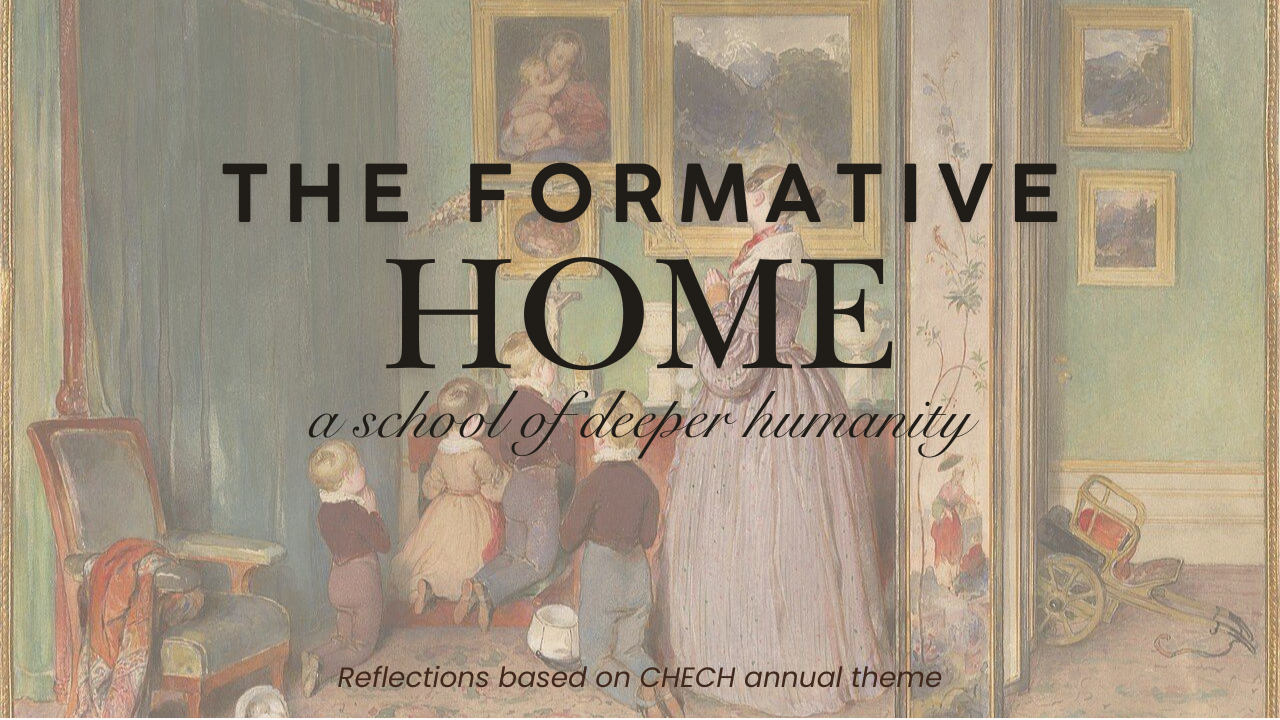
Beginning the Year with Intentional Spaces
The Formative Home invites us to look at our homes with fresh eyes this year: the ordered kitchen, the made bed, the corner where the books live. September is the month to start there, not with a full home makeover, but with one space made beautiful on purpose. A clean surface, a candle, a single piece of art at a child's eye level, small signals that this room is where learning and prayer happen, long before a lesson begins.
Challenge: pick one room or corner this week and make it a little more beautiful, then notice whether your children treat it differently.
Beauty is the first thing a child meets when he walks into a room, and it shapes how he carries himself there. It has little to do with money or decorating skill and a great deal to do with attention.
What beauty asks of a room. St. Thomas Aquinas names three conditions of beauty: integrity, proportion, and clarity (Summa Theologiae I, q. 39, a. 8). In a home, integrity means the room is whole and in good repair, the broken lamp fixed and the wobbling chair set right. Proportion means each thing has a place suited to the people who use it, like picture books on a shelf a four-year-old can reach. Clarity means the room shows plainly what it is for: the prayer corner looks like a place of prayer, and the lesson table looks like a place of work. When a room is clear about its purpose, children understand how to behave in it without being told.
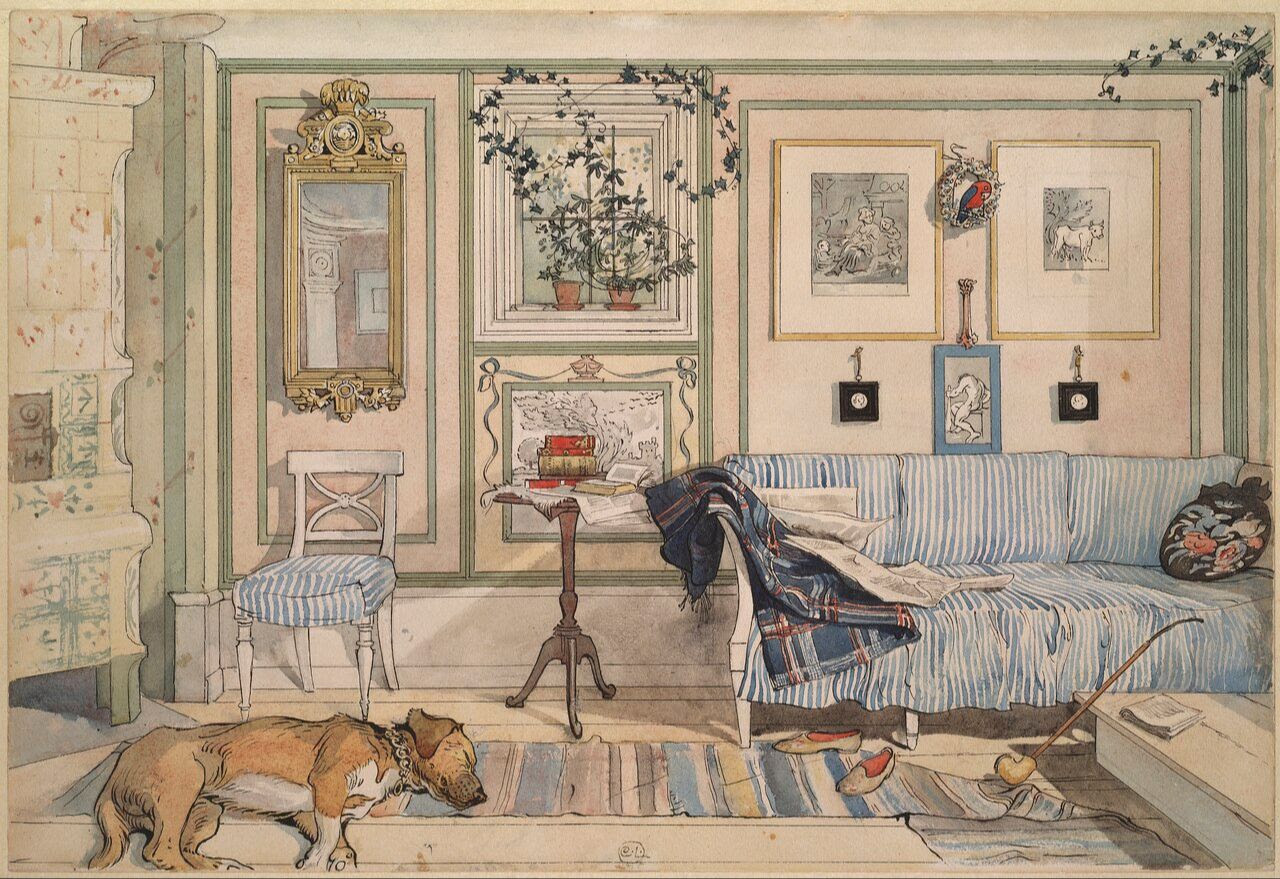
Two paintings. Carl Larsson spent the 1890s painting his own house in Sundborn, Sweden, published in 1899 as Ett Hem (A Home). The rooms are modest, full of light, and plainly lived in, and every one shows that someone chose what was in it and cared for it. This year's cover art, Peter Fendi's The Evening Prayer (1839), makes the same point from another angle. A mother and her children kneel before a small household altar, ordered and lovely, while a toy cart sits on the floor a few feet away. A home can have one beautiful, well-kept place at its center while the rest of the house goes on being lived in.
Where to begin. A few good candidates for the one space:
The prayer corner. A crucifix, an image of Our Lady (September is the month of Our Lady of Sorrows), a candle, and a cloth in the color of the season, green for Ordinary Time. Children notice when the cloth changes, and the change teaches the liturgical calendar better than any chart.
The lesson table. Clear it completely, then put back only what the day's work requires, plus one beautiful thing: a small vase, a good pencil cup, a print propped at eye level. The month's Before the Lesson printable art is made for exactly this.
A child's bedside. A lamp, a book, a holy card. The last thing a child sees at night and the first thing he sees in the morning are worth choosing well.
Then hand it over. Once the space is set, let the children take charge of it. One chooses the flowers each week, another trims the candle, another rotates the art. A child responsible for keeping a small place beautiful is practicing the habits of care the rest of this year will build on.
The Church calls the family "a school of deeper humanity" (Familiaris Consortio 21), and the rooms of a house teach its first lessons.
This week's challenge: pick one room or corner and make it a little more beautiful, then notice whether your children treat it differently.
Next month the theme moves outdoors, to the home garden and the world outside the door.
